
海边的曼彻斯特
Rashmika Mandanna and Director Anudeep KV to Collaborate?_我的网站

A |
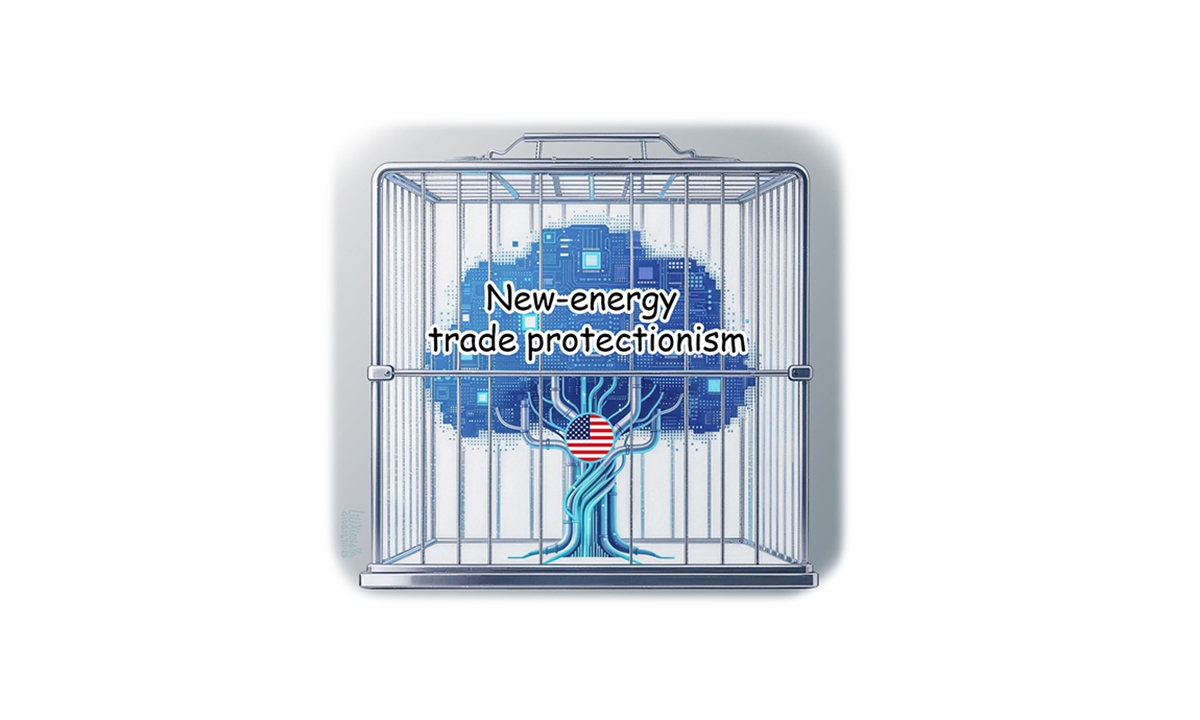
Recent media reports have questioned whether a natural gas plant built to power an Amazon data center project in Texas could become the largest climate polluter in the US. The controversy, whatever the eventual outcome, offers a reality check for America's artificial intelligence (AI) drive.
It exposes a growing contradiction: The US is racing to expand its AI capabilities, yet its protectionist trade policies are making it harder and more costly to access some of the clean-energy technologies needed to sustain that expansion. This raises a broader question: Can an energy-intensive AI race afford the costs of renewable energy protectionism?
The US is entering a new era of rising electricity demand. Data centers, the backbone of the AI economy, are emerging as one of the fastest-growing sources of power consumption. Much of that demand is still being met by fossil fuels: The International Energy Agency reports that natural gas supplies more than 40 percent of the electricity used by data centers in the US, making it their largest source of power.
So, it's not surprising that the expansion of data centers has raised concerns over their environmental impact and the pressure they could place on local power systems and electricity bills. A Gallup survey conducted in March found that seven in 10 Americans opposed the construction of AI data centers in their local area, including 48 percent who strongly opposed such projects.
The findings point to a broader challenge for the US: The race to develop AI is increasingly becoming a race to meet growing energy needs. Addressing this challenge will require more than advances in computing technology; it will also depend on an energy system capable of delivering large amounts of reliable, affordable and cleaner power. That, in turn, will require faster development and broader deployment of clean-energy technologies, from solar power to energy storage.
Yet in the clean-energy sector, the US has increasingly relied on protectionist trade measures that limit access to cost-competitive products from global markets. The country has placed greater emphasis on expanding domestic manufacturing capacity, but rebuilding entire clean-energy supply chains at home is a costly and time-consuming process. Even if expanded domestic production is achieved, it is likely to come at a higher cost, making the deployment of renewable technologies more expensive and potentially slower.
The solar industry offers a clear illustration of this policy direction. The US has continued to expand trade barriers in the sector. Reuters reported that the US government announced on Thursday a series of price floors and a 15 percent tariff on products made from polysilicon, a raw material used in solar panels.
The challenge lies in the limited scale of the US polysilicon industry. Reuters reported that the country has two polysilicon factories. Against this backdrop, relying on domestic polysilicon production while restricting access to imports runs counter to the goal of expanding solar power in the US. The country risks creating barriers that ultimately constrain its own access to the global supply chains needed for growth.
The pressing issue for the US is the speed at which new power demand is emerging. The expansion of data centers is creating electricity needs that cannot wait for domestic clean-energy capacity to develop gradually. Global supply chains can provide the scale and speed required in the near term. By narrowing access to these sources, the US risks turning clean-energy policy into a drag on the infrastructure needed for its AI race.
The US has placed AI high on its economic and technological agenda. The outcome of this race will matter greatly, as financial markets are also watching whether America can turn its AI efforts into commercial success.
This leaves the US with a difficult choice: Can it afford the cost of clean-energy protectionism while racing to build AI infrastructure? The answer may be no. Trade barriers that limit access to competitive renewable technologies could ultimately become a constraint on the AI expansion that Washington is seeking to accelerate.
The author is a reporter with the Global Times. [email protected]
。

B | The super success of The Girlfriend has done a world of good to Rashmika Mandanna! Apart from the commercial success, the romantic drama catapulted the actress to shoulder a film of any magnitude. Rashmika has become one of the most bankable box office draws in the South, apart from being one of most sought-after stars in Hindi. Rashmika on a signing spree? Rashmika Mandanna is presently enjoying one of the best phases of her career. She is signing films back-to-back, and the latest buzz is that she is in discussions for a female-centric project with director Anudeep KV. The filmmaker earlier delivered blockbuster comedy Jathi Ratnalu under the production of Nag Ashwin. Anudeep is reportedly working on a serious drama for his next film. Known for his quirky humour, Anudeep’s shift towards a more emotional and intense film has already grabbed attention. According to sources, he approached Rashmika for the lead role. The magnificent success of The Girlfriend made the director believe that Rashmika would bring the right depth and energy to the character. Rashmika does a balancing act While the actress liked the basic storyline, sources reveal that Rashmika asked him to come up with a detailed narration before making her final decision. If things move smoothly, the project could go on the floor towards the end of 2026. The film is expected to be a strong, performance-driven drama centred around a female protagonist, a space where Rashmika has already proved her mettle.Industry insiders believe that pairing Anudeep’s fresh storytelling with Rashmika’s growing star power could result in a unique and impactful film. Rashmika is currently shooting for her upcoming Telugu film Mysaa, which is progressing at a fast pace. She also has some major projects lined up across multiple languages, Rashmika seems to be balancing commercial films and content-driven roles with ease. Fans are eagerly waiting for an official announcement, hoping to see Rashmika in another powerful role. Meanwhile, it is clear that the actress is heading into 2026 with a packed schedule. Also Read: Vijay Deverakonda and Rashmika Mandanna’s New Film Begins… Silently。
Current article:http://aiidwjz.zhuankaizhuohangwangdixi.shop/jeqfwqc/20260826/1322.html
Published on:03:17:17


1
제주항공 9월 말부터 부산~구이린 노선에 주 4회 신규 취항2
世界首个电磁橇设施在山东济南成功运行3
【吉田響独占インタビュー2】豪快な激走のち救護室直行も回復で丼飯を豪快に食らう4
苹果完成权力交接铺垫,库克下周将正式卸任CEO5
Filmfare Flashback: When Ranveer Singh Gave a Speech in Front of Ranbir Kapoor & Imran Khan6
沿用DeepSeek架构,美国大模型开始抄中国作业7
五一假期将至 文化和旅游部发布出游提示8
A股午评:超3500只个股飘红,三大指数集体收涨,A股午评:超3500只个股飘红,三大指数集体收涨9
PLA Army fields new wheeled armored vehicles in Gobi Desert10
8,734 allotted shares of Unitree IPO go unpaid11
防御台风“沙德尔” 福建撤离渔船和海上人员12
【观点】国都期货:基本面供给增加、需求下降,铁矿石延续区间震荡13
马斯克首次向 Cursor 全员讲话曝光:称 Grok 已经落后,而他“不习惯失败”14
一大牌面!10年9次入选揭幕战!34场全美直播!41岁了还值4.3亿15
“人才夜市”来咯!
- 随机推荐
1
宇宙宏观个体差异的成因| 赵杰 | 量子意识2
“易中天”二季度赚更多!股东榜透露重要信息3
项目建设掀热潮 奋力决胜攻坚战4
영동군, 소멸 위기 속 순유입 전환·혼인 증가 '반등의 불씨'5
SpaceX今晚将在2019年发射第一颗卫星:10颗铱通信卫星6
동년배 때려 숨지게 한 80대 1년 6개월 선고7
Famous ancient Chinese painting displayed in Hangzhou8
Maharashtra: प्रेमिका को इंस्टाग्राम पर मैसेज कर रहा था एक लड़का, प्रेमी ने कर दी पीट-पीटकर हत्या9
四世同堂合家欢10
乐山市:到2030年,打造5个以上国省级先进制造业集群11
太空视角看洛杉矶山火有多严重12
SL seeks ILO help for digital database13
新政府向这一机构开刀!前总理Bill English复出14
过量输液对健康有害:吉林省几家医院已宣布取消成人普通门诊输液。15
奥克兰这些车牌惹事了,政府发函要求索回……